
Solar power for homes in Chiang Mai
— an honest guide
We are a Phuket-based solar company, and we will not pretend to have a crew around the corner in Hang Dong. What we do offer Chiang Mai homeowners, retirees, café owners and boutique hotels: a free remote design consultation and feasibility assessment with realistic numbers — and for mid-to-large installation projects, we consider taking on the job case by case.
Honestly: our installation team is based in Phuket, not Chiang Mai. For Chiang Mai we offer a free remote design consultation and feasibility assessment — sizing, savings estimate and equipment spec from your bills and roof photos — and we consider mid-to-large installation projects (boutique hotels, cafés, commercial buildings) case by case. For a typical single home, our report also works as an independent benchmark for quotes from local installers. Solar itself stacks up well in Chiang Mai: typical payback for a well-sized system is 3–5 years.
Good sun, daytime lifestyles, and buildings that fit solar well
Chiang Mai's mix of retirees and digital nomads with their own houses, cafés full from morning to evening, and boutique hotels with pools and air-conditioning is exactly the daytime-load profile that rooftop solar offsets best.
Working from home matters here more than in most Thai cities: if you or your tenants run air-conditioning and computers through the day, a large share of solar production is consumed on the spot — which is where the savings come from. For the full economics in English, see our guide Is solar worth it in Thailand?
What the February–April smoke haze means for solar
Anyone selling solar in northern Thailand without mentioning the burning season is not being straight with you. Here is the honest picture.
During the roughly February–April haze period, smoke dims the sunlight reaching your roof and fine dust settles on the panel glass, so production drops below what a clear sky would deliver. It is a temporary, seasonal effect — not a reason to write off solar, but a real factor an honest design should acknowledge.
The practical response is simple: schedule panel cleaning into your maintenance routine, particularly at the end of the haze season, so soiling does not keep dragging output down after the skies clear. Rain does part of the job in the wet season; the dry, dusty months are when deliberate cleaning pays off most.
Averaged across the whole year, Thailand receives around 4.5–5 peak sun hours per day, and our feasibility estimates use realistic year-round figures rather than best-case sunny days. A few hazy weeks reduce, but do not undermine, a 25–30 year investment.
Chiang Mai areas we regularly assess remotely
Wherever your roof is in Chiang Mai province, a remote feasibility assessment works the same way — these are the areas we see most often:
Popular with retirees and families — detached houses and pool villas with generous roof space and daytime air-conditioning loads
Garden homes, small resorts and boutique retreats — larger plots often mean unshaded roofs that suit solar well
Fast-growing residential area — modern housing estates where a right-sized on-grid system fits neatly on the roof
Guesthouses, cafés and shophouses — smaller roofs, but daytime business loads can still make the numbers work
Cafés, co-working spaces and boutique hotels — high daytime consumption is exactly what rooftop solar offsets best
Countryside homes and retreats — where grid interruptions are more common, a hybrid system with battery is worth assessing
Real installations by our team
Unstaged photos from our own job sites in southern Thailand — the same engineering standards go into every design we produce for Chiang Mai.
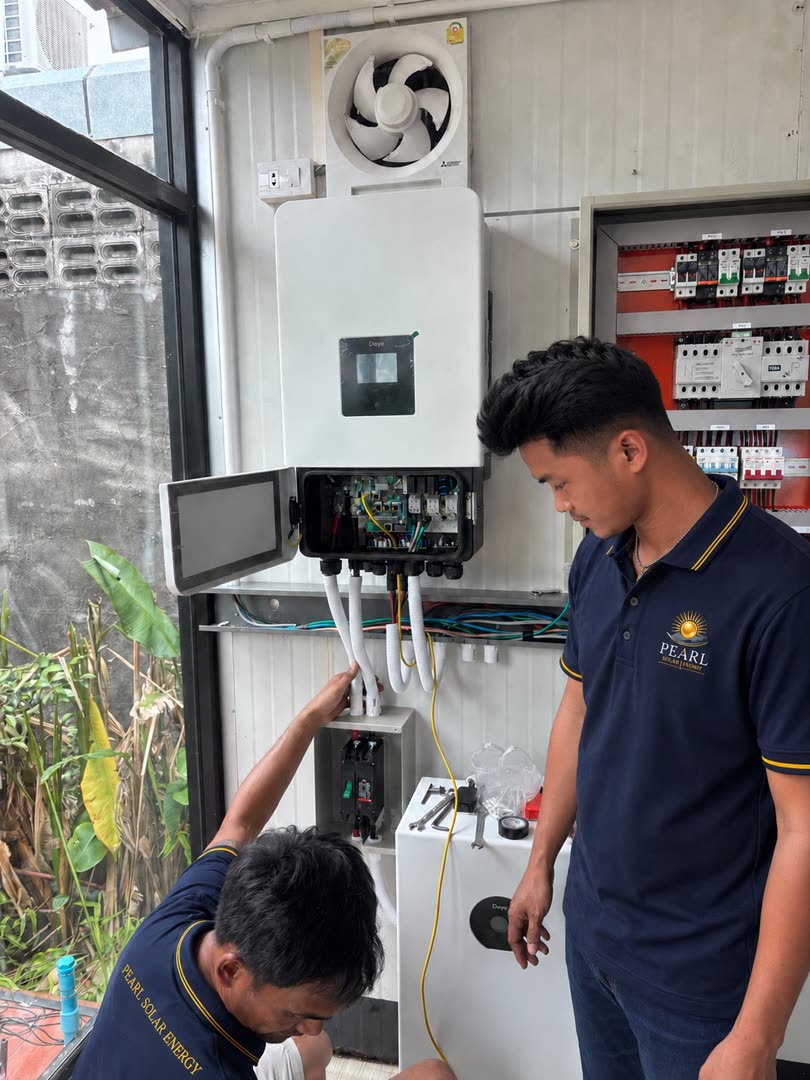
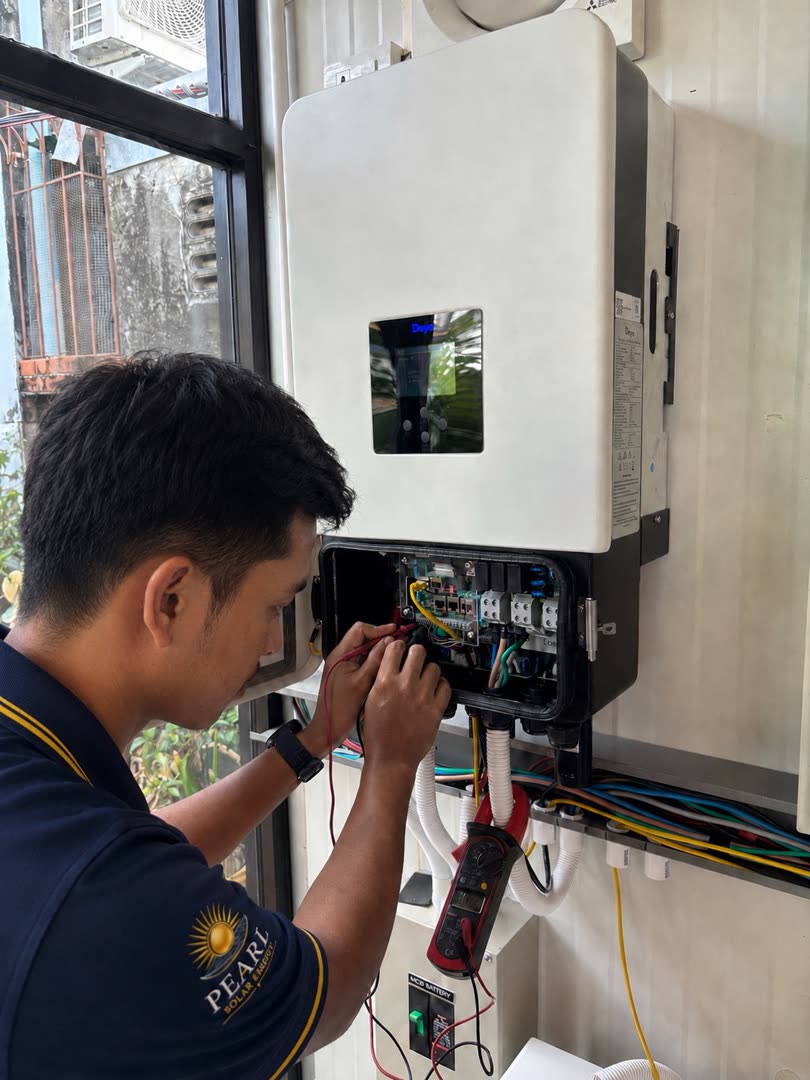
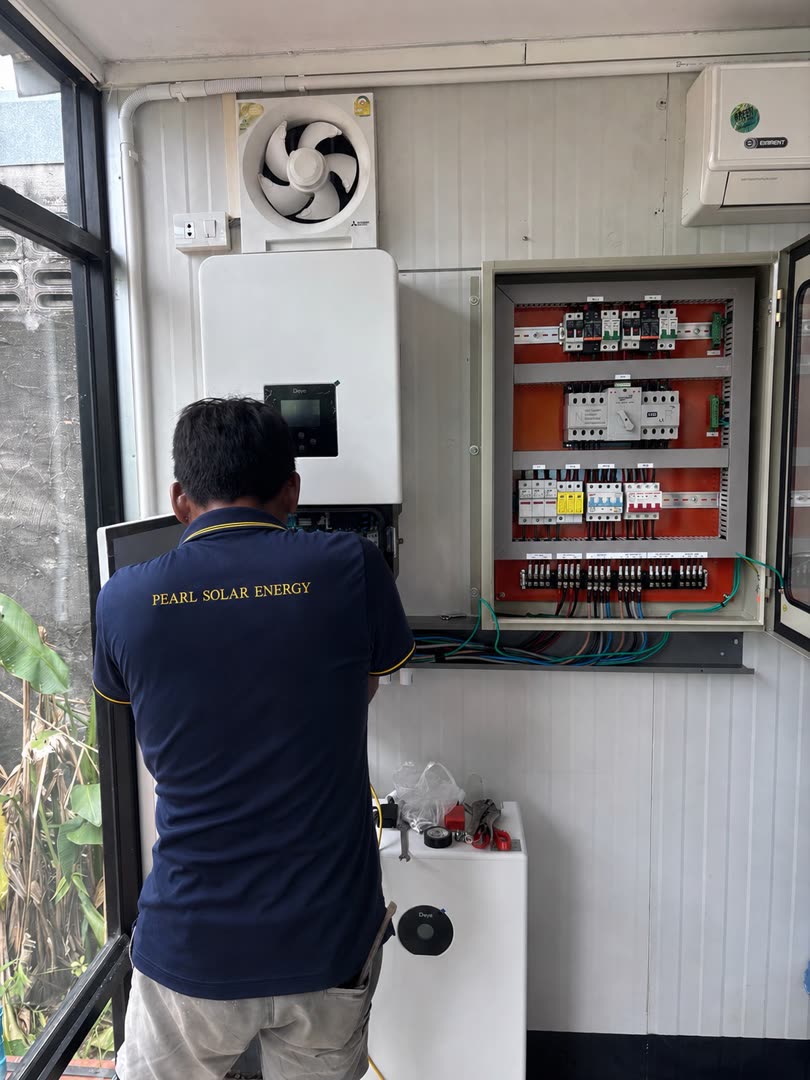
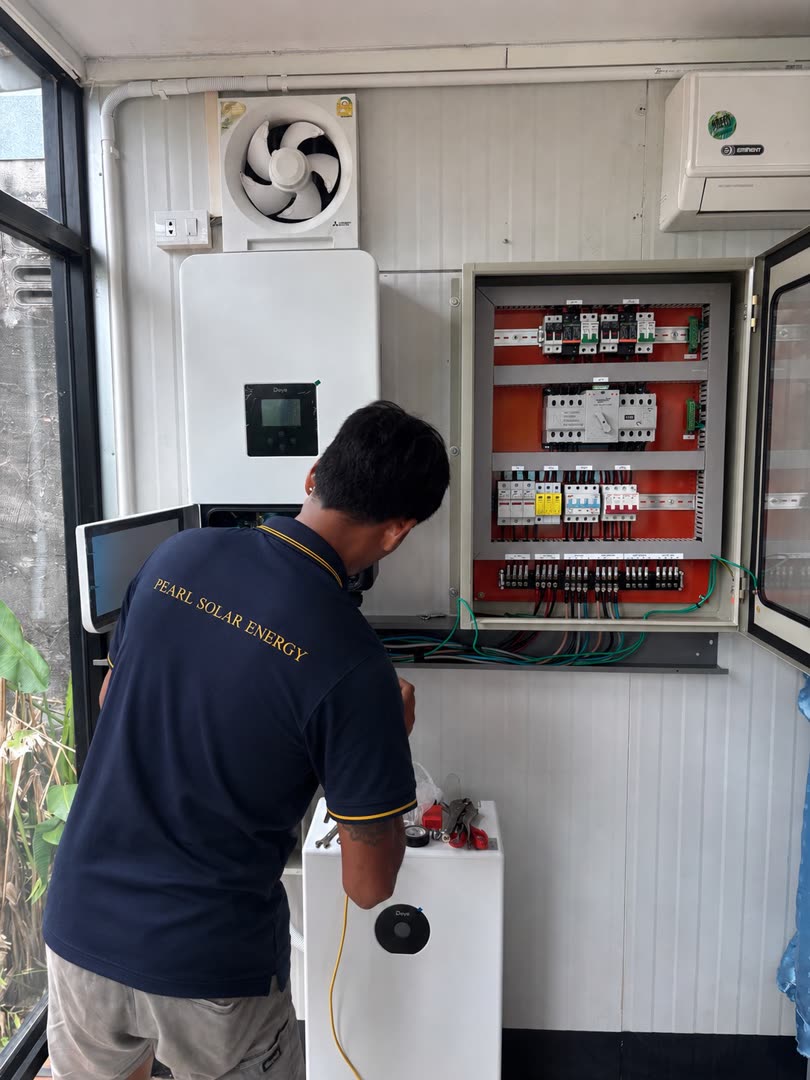
Own a property on the Andaman coast too? We install there in full: Phuket, Khao Lak & Phang Nga and Krabi & Ao Nang. Nationwide coverage details (Thai): service areas across Thailand.
From your electricity bill to a written feasibility report — remotely
- 1 · Send us your details
Recent electricity bills, roof photos or a Google Maps pin, and building plans if you have them — by email or LINE, in English. - 2 · Free video consultation
An English-language video call with our engineering team to understand your usage pattern, roof and goals — no charge, no obligation. - 3 · Written feasibility assessment
Recommended system size, realistic production and savings estimates for Chiang Mai conditions (haze season included), equipment specification and an indicative budget in THB. - 4 · Honest recommendation on who should install
For mid-to-large projects — boutique hotels, cafés, commercial roofs — we consider taking on the installation ourselves, case by case. For a typical single home, we tell you plainly if a qualified local installer is the more practical choice, and our report becomes your benchmark for comparing their quotes. - 5 · Permits and next steps
Chiang Mai is a PEA (Provincial Electricity Authority) service area. If we take the project, we handle the paperwork; either way, our guide to solar permits in Thailand explains what a legal grid connection requires.
Questions from Chiang Mai owners
Do you install solar in Chiang Mai?
We are honest about this: our installation team is based in Phuket, and we do not have a permanent crew in Chiang Mai. For Chiang Mai we offer a free remote design consultation and feasibility assessment — system sizing, savings estimate and equipment specification based on your bills, roof photos or plans. For mid-to-large installation projects such as boutique hotels, cafés with high daytime loads or commercial buildings, we consider taking on the installation case by case. For a typical single home, we will tell you honestly whether working with us or with a qualified local installer makes more sense — and our design work helps you brief and compare local quotes either way.
How does the February–April smoke haze affect solar output?
During northern Thailand's burning season, haze and dust settling on the panels can temporarily cut output — both by dimming sunlight and by soiling the glass. The practical answer is to plan panel cleaning into your maintenance schedule, especially at the end of the haze period. Averaged across the whole year, Thailand still receives around 4.5–5 peak sun hours per day, and a properly designed system accounts for seasonal variation, so the haze months reduce but do not undermine the overall economics.
Is solar worth it for a house in Chiang Mai?
For a household or business that uses meaningful electricity during the day — air-conditioning, a home office, a café or guesthouse — the numbers generally work. As a rule of thumb, each 1 kWp of solar produces roughly 150 units per month, worth about 600–650 baht at typical tariffs, and well-sized systems commonly pay back in 3–5 years while panels are warrantied for 25–30 years. If the house sits empty all day and loads run mostly at night, an on-grid system saves much less — we will tell you that plainly in the feasibility assessment.
Who handles the permits and paperwork in Chiang Mai?
Chiang Mai is served by the Provincial Electricity Authority (PEA), so a grid-connected system needs the standard PEA notification and approval process, including engineer-certified drawings. If we take on your project, we prepare the paperwork as part of the job. If you proceed with a local installer, our feasibility report and our English-language guide to solar permits in Thailand help you check that the paperwork is being done properly.
How does the free remote consultation actually work?
You send us recent electricity bills plus roof photos, a Google Maps pin or building plans, and we schedule a video call in English. From that we produce a written feasibility assessment: recommended system size, realistic production and savings estimates for Chiang Mai conditions, equipment specification and an indicative budget. There is no charge and no obligation — the assessment is yours to use, including as a benchmark for quotes from local installers.
Get a free solar feasibility assessment for your Chiang Mai property
Call, message us on LINE, or send your bills and roof photos through our contact page — we reply in English with a written assessment and an honest recommendation. No charge, no obligation, no pressure.
Pearl Solar Energy Co., Ltd. · 19/27 Moo 2, Wichit, Mueang Phuket, Phuket 83000 · Mon–Sat 08:00–17:00
← Solar installation in Phuket (English) · Is solar worth it in Thailand? · หน้าภาษาไทย →